
DET-style mini practice · 18 tasks
Small Discoveries, Shared Places
Read and Complete · Read and Select · Listen and Type
This original sampler practises three task types at intermediate level. Six reading passages contain 48 missing-word endings, followed by six word decisions and six dictations.
Choose study mode to work at your own pace, or start a timed practice run. Check your sound before attempting Listen and Type.
Study mode lets you edit and reveal answers. Timed reading uses 3 minutes per passage and 5 seconds per word decision. The full run adds 1 minute per dictation. These are the practice settings for this sampler.
Marking accepts capitalisation and surrounding spaces in word endings. Dictation also ignores punctuation and accepts the spelling variants listed in the answer review. Every word must otherwise match.
Accuracy here measures these practice tasks. It does not estimate a DET score.
Read and Complete
Type only the missing letters. Each passage has eight gaps; the small number after each gap gives the number of missing letters.
Task 1 · The hidden lane
- 1.1: trace — missing letters: ace. After to, use the base verb trace: follow the route to establish where it goes.
- 1.2: carried — missing letters: ried. Carried is the past form of carry. The notebook travelled with Mara; change y to i before adding ed.
- 1.3: marked — missing letters: ked. Marked means recorded with a sign. Every turn tells us what Mara put on the map.
- 1.4: matched — missing letters: ched. Matched means was the same as. The gate and photograph contained the same number.
- 1.5: compared — missing letters: ared. Compared fits the pattern compare one source with another: notes with memories.
- 1.6: guide — missing letters: ide. Guide means lead someone along a route. The neighbour knew the final section.
- 1.7: discover — missing letters: over. Discover means find out something previously unknown. The group did not yet know the destination.
- 1.8: follow — missing letters: low. Follow the route means go along it. Use the base verb after help other walkers.
Read the whole paragraph again after completing the words. Check the sequence of events and the grammar around each gap.
Task 2 · The sharing shelf
- 2.1: secured — missing letters: ured. Secured means fastened firmly. The boards were attached to a wall, so they could hold books.
- 2.2: sorted — missing letters: ted. Sorted means arranged into groups. The following phrase into groups gives the meaning.
- 2.3: suggest — missing letters: gest. Suggest means propose an idea. After could, use the base form of the verb.
- 2.4: message — missing letters: sage. A message is a short communication left for someone else. The next reader will see it.
- 2.5: popular — missing letters: ular. Popular means liked or used by many people. Became is followed by this adjective.
- 2.6: complete — missing letters: lete. Complete means having every part. No missing pages explains the required condition.
- 2.7: available — missing letters: lable. Available means ready for use. People could use the shelf during evening events.
- 2.8: donated — missing letters: ated. Donated means gave something to help a person or project. The family gave its collection.
Read the whole paragraph again after completing the words. Check the sequence of events and the grammar around each gap.

Task 3 · The hall clock
- 3.1: inspect — missing letters: pect. Inspect means examine carefully. The repairer first needs to find the fault.
- 3.2: disappear — missing letters: ppear. Disappear means go missing from sight. A tray prevents small screws from getting lost.
- 3.3: connection — missing letters: ection. A connection joins parts together. Loose describes a connection that is no longer firm.
- 3.4: replace — missing letters: lace. Replace means remove a damaged part and put another one in its place.
- 3.5: confirm — missing letters: firm. Confirm means check that a result is correct. Lina observes the clock over several days.
- 3.6: records — missing letters: ords. Records are written details kept for later reference. Daily describes how often Lina made them.
- 3.7: accurate — missing letters: rate. Accurate means correct. The repaired clock continued to show the right time.
- 3.8: contributed — missing letters: ributed. Contributed to means helped with. The past-tense verb describes the people thanked by the committee.
Read the whole paragraph again after completing the words. Check the sequence of events and the grammar around each gap.
Task 4 · The courtyard garden
- 4.1: measured — missing letters: ured. Measured means found the size. Volunteers needed this information before planning the garden.
- 4.2: containers — missing letters: ainers. Containers hold something. Here they hold soil and plants rather than books or tools.
- 4.3: lined — missing letters: ned. Lined means covered the inside. The lining prepares the crates to hold soil.
- 4.4: labels — missing letters: els. Labels identify things. These labels give the plant names.
- 4.5: shade — missing letters: ade. Shade is protection from direct sunlight. The broad leaves provide it.
- 4.6: read — missing letters: ad. Read fits their books. Use the base verb after to.
- 4.7: watered — missing letters: ered. Watered means gave water to. Each morning indicates regular care on the rota.
- 4.8: expand — missing letters: and. Expand means make larger. The group wants a bigger garden next year.
Read the whole paragraph again after completing the words. Check the sequence of events and the grammar around each gap.
Task 5 · A bench for listening
- 5.1: record — missing letters: ord. Record means capture sounds so they can be studied later. The engineer studies the sound environment.
- 5.2: grasses — missing letters: sses. Grasses are plants with narrow leaves. Tall plants soften the edge of the path.
- 5.3: opening — missing letters: ning. An opening is a gap through which someone can pass. Wide and for wheelchairs identify its purpose.
- 5.4: quietly — missing letters: etly. Quietly is an adverb describing how to sit: without making much noise.
- 5.5: sheltered — missing letters: tered. Sheltered means protected or screened. Feel more is followed by an adjective.
- 5.6: listen — missing letters: ten. Listen for means pay attention in order to hear something. Here people hope to hear birds.
- 5.7: accessible — missing letters: ssible. Accessible means easy to reach or use. The wide opening helps people reach the bench.
- 5.8: explain — missing letters: lain. Explain means make something clear. The board tells visitors why the project was created.
Read the whole paragraph again after completing the words. Check the sequence of events and the grammar around each gap.
Task 6 · Objects in the window
- 6.1: history — missing letters: tory. History is the account of an object's past. The lenders describe how their objects were used.
- 6.2: clarity — missing letters: rity. Clarity means being easy to understand. The owner checks whether visitors can understand each card.
- 6.3: approve — missing letters: rove. Approve means agree that something is acceptable. The lenders check the wording before display.
- 6.4: recognised — missing letters: gnised. Recognised means identified from previous experience. Tools their families had used provides the clue.
- 6.5: photograph — missing letters: ograph. A photograph records a visual image. The owner wants a record before returning the objects.
- 6.6: encourage — missing letters: urage. Encourage means give someone a reason or confidence to act. The display may inspire contributions.
- 6.7: valued — missing letters: ued. Valued means regarded as important or appreciated. Residents liked the care given to their objects.
- 6.8: share — missing letters: are. Share means let other people experience something too. Here residents tell their stories.
Read the whole paragraph again after completing the words. Check the sequence of events and the grammar around each gap.
Read and Select
Is the displayed item a standard English word? Choose Yes or No.
Task 7 · Is this a real English word?
Yes — sturdy. Sturdy is a real adjective meaning strong and well made. It describes something that can withstand use or pressure.
The stool supports a heavy stack of books without bending. It is sturdy.
Meaning check: Cambridge Dictionary: sturdy.

Task 8 · Is this a real English word?
No — vornelth. Vornelth was invented for this practice item. Choose No: it is not a standard English vocabulary item. Familiar-looking letter patterns alone do not establish that a word exists.
Task 9 · Is this a real English word?
Yes — glimpse. Glimpse is a real noun or verb. As a noun, it means a very brief look; as a verb, it means to see something briefly.
The fox is already moving behind the tree. The observer gets only a glimpse of it.
Meaning check: Cambridge Dictionary: glimpse.

Task 10 · Is this a real English word?
No — plimvash. Plimvash was invented for this practice item. Choose No: it is not a standard English vocabulary item. Familiar-looking letter patterns alone do not establish that a word exists.
Task 11 · Is this a real English word?
Yes — cautious. Cautious is a real adjective describing someone who takes care to avoid danger or mistakes.
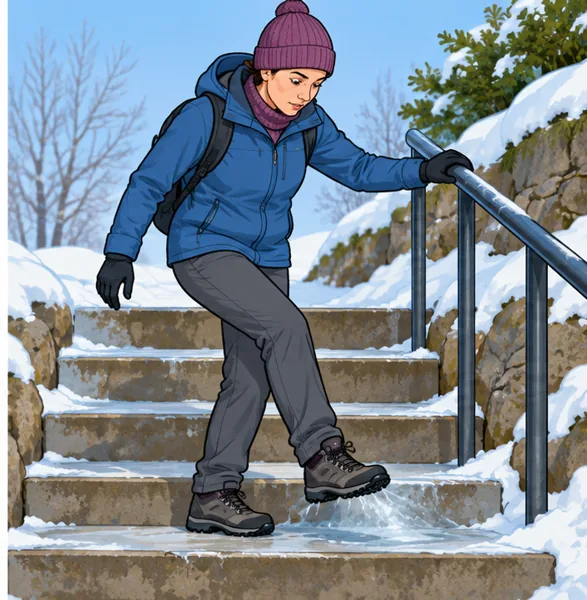
The walker tests the icy step and holds the rail. She is cautious.
Meaning check: Cambridge Dictionary: cautious.
Task 12 · Is this a real English word?
No — dralnish. Dralnish was invented for this practice item. Choose No: it is not a standard English vocabulary item. Familiar-looking letter patterns alone do not establish that a word exists.
Listen and Type
Play the recording, then type the whole sentence. You have up to three successful plays per sentence. Capitalisation and punctuation do not affect marking.
Task 13 · Listen and type the sentence
Transcript: The village hall keeps spare chairs in a locked room.
The present-simple verb keeps ends in s because its subject is the village hall. Include the small words in and a.
Task 14 · Listen and type the sentence
Transcript: Our guide noticed a narrow path beside the old stone mill.
Noticed is a past-tense verb. Beside the old stone mill gives the location of the narrow path.
Task 15 · Listen and type the sentence
Transcript: Please place the painted stones carefully beside the entrance gate.
The instruction begins Please place. Painted describes the stones, and carefully describes how to place them.
Task 16 · Listen and type the sentence
Transcript: A detailed map can help visitors find the quiet reading room.
After can, use help without s. Reading room is a two-word noun phrase; detailed describes the map.
Task 17 · Listen and type the sentence
Transcript: Several neighbours brought useful tools to repair the old noticeboard.
Brought is the past form of bring. The recording uses neighbours and noticeboard; neighbors and notice board are also accepted spellings here.
Accepted spelling variants: Several neighbors brought useful tools to repair the old noticeboard. / Several neighbours brought useful tools to repair the old notice board. / Several neighbors brought useful tools to repair the old notice board.
Task 18 · Listen and type the sentence
Transcript: Yesterday we watched dark clouds gather above the quiet harbour.
Yesterday places the event in the past. Watched is followed by gather to describe what the clouds did. Harbour is the UK spelling; harbor is accepted too.
Accepted spelling variants: Yesterday we watched dark clouds gather above the quiet harbor.
Submit to grade your whole test, OR use 👁 Show Answer per part / per question.
Learning review and practice guide
1. Read the clues
Read and Complete: scan the whole passage first. Use the visible beginning, the number of missing letters, grammar and meaning together. Each box takes only the missing letters, not the whole word.
2. Work accurately
Read and Select: decide whether the displayed item is a standard English word. Do not rely only on familiar letter patterns. Listen and Type: hear the whole sentence, write it in order, then use another play to check short words and endings.
3. Review and repeat
Review the explanations and rebuild each completed sentence. Make a personal list of spelling patterns and missed function words. Study mode allows edits and answer reveals; timed practice locks each task after you continue. Start a fresh run when you want to measure progress.
Use the meaning, spelling pattern and grammar together. A plausible-looking sequence of letters is not enough. Answer reveals show explanations but never fill an answer or earn credit.