
ALL ENGLISH 4U · B1 VOCABULARY PRACTICE
100% Original Practice TestUnit 9: Travel & Transport“travel words · phrasal verbs · word families” – 68 interactive questions
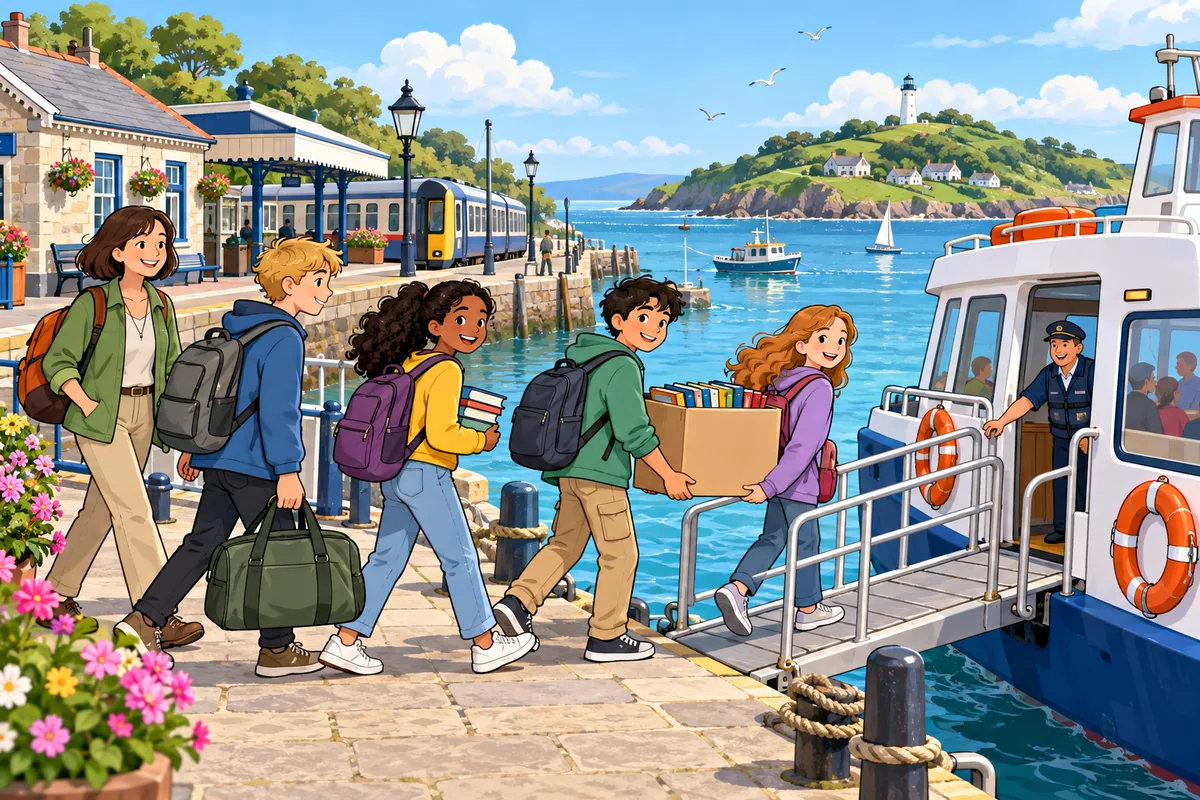
📖 Vocabulary Reference – Travel & Transport
Study the notes, then work through the exercises for this unit.
How to Form It
Build travel words from their families and keep phrasal verbs together as one unit of meaning.
Change the word form
A base word can become a noun, adjective or adverb. The sentence tells you which form it needs.
- Positive
- subject + be + adjectiveThe coastal route is scenic.
- Negative
- subject + be + not + adjectiveThe island is not accessible by road.
- Question
- question word + do/does + subject + base verb?How does the coach reach the harbour?
Useful changes: travel → traveller; depart → departure; choose → choice; comfort → comfortable / uncomfortable; fly → flew / flown / flight.
Verb + particle
A small word such as off, on or back can change a verb’s meaning. Learn the complete phrase.
- Positive
- subject + verb + particleThe group checked in at the guesthouse.
- Negative
- subject + do/does/did not + base verb + particleWe didn’t get off at the wrong stop.
- Question
- Do/Did + subject + base verb + particle?Did Maya find out which pier we needed?
Remember: with separable verbs, a noun can often go before or after the particle (pick up the ticket / pick the ticket up), but a pronoun goes in the middle (pick it up).
Clue Words & Patterns
Notice common travel partners, then use the full situation to choose the right phrase.
Tickets and timetables
We booked our seats early so we could catch the morning train.
Book means reserve; catch means get on a service before it leaves.Getting around
After we got out of the taxi, we got on the ferry.
Get out of is used when leaving a car or taxi; get on is used when boarding a bus, train, plane or ferry.Plan a journey
A journey is travel from one place to another; a trip is a visit or outing that may include the return. Accommodation is a place to stay. Book a place in advance, pack your bags and catch the service before it leaves. An operator may cancel a service so it does not run, or delay it so it leaves later. You reach your destination without adding a preposition.
A passport is a travel identity document. Going abroad means going to another country; a foreign visitor comes from another country.
Places and transport
Public transport includes shared buses and trains; a vehicle can be a car, bus or lorry. A coach carries passengers on longer road journeys. A ferry crosses water with people or vehicles; a cruise is a holiday spent travelling by ship. A flight is a journey by air.
A resort is a holiday place; a harbour shelters boats. Nearby means a short distance away. A convenient connection makes travel easy; a crowded carriage is full of people. Traffic is vehicles using a road. A crash is a violent collision.
Small changes, different travel meanings
We got on the train at North Quay.
Get on is used with buses, trains, planes and ferries.We got off the train at Willow Bay.
Get off means leave the vehicle at a stop or station.The exchange group set off just after breakfast.
Set off describes the start of a trip.They got back to the hostel before sunset.
Get back means return to a place.By can introduce a method of travel (by ferry), while on can describe being aboard (on the ferry). Use arrive at for a specific point such as a station, and commonly arrive in for a town or country. British English usually uses at the weekend; American English often uses on the weekend.
More useful travel expressions
Make a journey means travel from one place to another. Go on a trip describes a visit or outing. A travel agency arranges journeys; public transport is shared transport such as buses and trains. In advance means before the planned time.
Watch Out & Common Mistakes
Check the word partner, the particle, and the preposition that follows the main word.
Using the wrong transport preposition
WrongWe travelled with ferry to the island.
BetterWe travelled by ferry to the island.
Use by + a transport method when saying how you travelled.Confusing arrive at and arrive in
WrongThe train arrived in platform four.
BetterThe train arrived at platform four.
Use arrive at for a specific point; use arrive in with a town, city or country.Choosing the wrong verb for a ticket
WrongWe did a ticket online.
BetterWe booked a ticket online.
Book a ticket means reserve or buy it; do a ticket is not the usual collocation.Leaving out the particle
WrongWe got in the large passenger ferry at the east pier.
BetterWe got on the ferry at the east pier.
Get on means board a ferry, train, bus or plane.Putting a pronoun after a separable particle
WrongPlease pick up them before we leave.
BetterPlease pick them up before we leave.
With this separable phrasal verb, a pronoun goes between the verb and particle.Using the wrong word family
WrongThe island’s main attract is its lighthouse walk.
BetterThe island’s main attraction is its lighthouse walk.
After “the island’s main”, this sentence needs a noun. Attraction names a feature that draws visitors.Quick check: choose before opening
Decide which expression fits the trip, then read the explanation.
1. We travelled by / on coach from the city to the coast.Check explanation
by introduces the method of travel. Say “on the coach” when describing where someone is aboard.
2. To begin their crossing, the group got on / got off the ferry at the mainland pier.Check explanation
got on means boarded the ferry to begin the crossing. Got off would mean left it.
3. The visitors arrived at / to the ferry terminal just before noon.Check explanation
at fits arrive at a specific point such as a terminal. Arrive to does not fit this sentence; use in with a town, city or country.
Check your whole test
Submit to grade your whole test, OR use 👁 Show Answer per part / per question.
Review your learning
Explain each correction: did you need a travel word, a phrasal verb, a preposition or a different word form? Read the full sentence again to check both meaning and grammar.
Show Answer displays a model and explanation while leaving your response unchanged. After editing an answer, check again. Write a short travel plan using three new phrases from this unit.