
CELPIP Speaking · Set 2 · Practice Test 2 · Original practice
Small Changes, Shared Possibilities
One warm-up and eight speaking tasks. Prepare, speak aloud, then listen and reflect. Use your own examples and viewpoint.
Task 5 has an additional silent choosing stage. This practice does not calculate an official CELPIP score.
0 of 8 practice tasks attempted
Optional microphone recording requires your browser permission and a supported secure context. Nothing is uploaded. Recordings, notes and ratings stay only in this tab and disappear on reset, reload or closing. Download recordings you want to keep. Without a microphone, use the timer and speak aloud.
Warm-up: Speaking Practice Task
Talk about one simple change that made an everyday routine easier. Describe the earlier difficulty, the change you made and the result.
Optional recording stays in this tab. Timer-only practice is always available.
Show guide and sample responses
Plan your response
- Name the old problem.
- Explain what you changed and when.
- Give a result and reflection.
- Unscored warm-up: check your microphone and pace.
- Use one real or imagined everyday example.
Before I changed it, … · The difference now is …
Check if all three parts are answered and connected.
Illustrative response
I used to waste time looking for my keys and transit card every morning. One evening I put a small tray beside the front door and decided to keep both things there. I also started packing my work bag after dinner instead of just before leaving. The change took very little effort, but my mornings became much calmer. Now, when I finish breakfast, I can pick up my bag and leave without searching every coat pocket. I still occasionally forget something, so I check the tray before going to bed. This experience taught me that a useful routine does not have to be complicated. It only needs to solve a problem that keeps happening.
Why it works: Check if all three parts are answered and connected.
Illustrative 114-word response. Adapt the ideas to your own speaking speed within 60 seconds.
Check your response
- Did I answer every part of this task and keep the intended listener in mind?
- Did I support my main point with specific, relevant details?
- Did I organize my response and finish within the response time?
Task 1: Giving Advice
Your friend is helping a neighbourhood group decide what to do with an unused lot. Some residents want a community garden; others want extra parking. Advise your friend which option to recommend and how the group could make a practical decision.
Optional recording stays in this tab. Timer-only practice is always available.
Show guide and sample responses
Plan your response
- State your advice.
- Compare benefits and trade-offs.
- Suggest a next step.
- Give a definite recommendation with reasons.
- Recognize a drawback and offer a practical safeguard.
You might want to … · Before committing to that, … · A short trial would …
A strong response recommends an option, explains why, acknowledges a real concern, and gives a feasible next step.
Illustrative response
I would suggest trying a small community garden first, rather than paving the whole lot immediately. It could give neighbours a shared activity and somewhere to grow herbs or vegetables. You might begin with a few raised beds, so the group would not have to prepare all the land at once. However, I would check two things before making that recommendation: whether the site gets enough sunlight and whether residents can commit to watering it. A garden that nobody maintains would soon become another problem. The parking proposal deserves a fair hearing too, especially if nearby residents genuinely lack spaces. Why not ask households what they need and compare the costs of both plans? If enough people volunteer, you could run the garden for one season and keep a simple record of participation. After that, the group would have evidence to discuss, instead of choosing only on enthusiasm. That seems a sensible way to test an idea while leaving room to change direction.
Why it works: A strong response recommends an option, explains why, acknowledges a real concern, and gives a feasible next step.
Illustrative 163-word response. Adapt the ideas to your own speaking speed within 90 seconds.
Check your response
- Did I answer every part of this task and keep the intended listener in mind?
- Did I support my main point with specific, relevant details?
- Did I organize my response and finish within the response time?
Task 2: Talking about a Personal Experience
Describe an occasion when you helped solve a small practical problem in your building, neighbourhood or workplace. Explain what was wrong, what you did and how the situation changed.
Optional recording stays in this tab. Timer-only practice is always available.
Show guide and sample responses
Plan your response
- Set the time and place.
- Describe your action and other people's responses.
- Give the outcome and takeaway.
- Use chronological past-tense narration.
- Include one concrete detail; do not claim sole credit unnecessarily.
The problem began when … · We checked … · After that, …
Look for a clear problem, contribution and result, followed by a brief reflection.
Illustrative response
Last winter, new residents in my building kept leaving cardboard beside the wrong recycling bins. The notice board was full of old instructions, so it was difficult to know which information to follow. I offered to help our building coordinator update it. We checked the collection schedule, removed the outdated sheets and made one short notice. Before putting it up, I asked a neighbour who had recently moved in to read it. She pointed out that we had forgotten to explain where large boxes should go, so we added a diagram. Afterward, fewer boxes were left in the corridor. I was pleased because the solution was inexpensive, and asking an actual reader had helped us spot the missing detail.
Why it works: Look for a clear problem, contribution and result, followed by a brief reflection.
Illustrative 119-word response. Adapt the ideas to your own speaking speed within 60 seconds.
Check your response
- Did I answer every part of this task and keep the intended listener in mind?
- Did I support my main point with specific, relevant details?
- Did I organize my response and finish within the response time?
Task 3: Describing a Scene
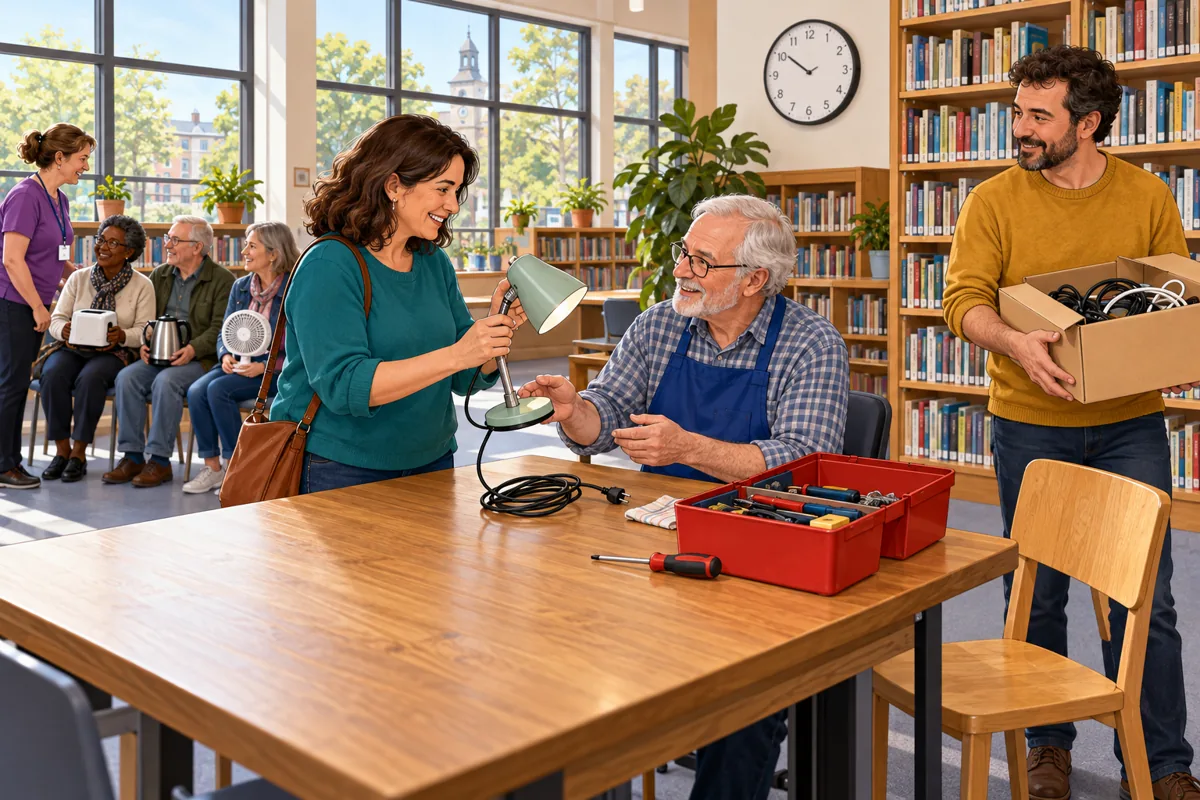
Describe the people, objects and actions in this library repair session. Speak to someone who cannot see the picture, and organize your description so they can follow the scene.
Optional recording stays in this tab. Timer-only practice is always available.
Show guide and sample responses
Plan your response
- Name the setting.
- Move from foreground to right and background.
- Use accurate positions and visible actions.
- Describe visible facts; mark guesses as possibilities.
In the foreground, … · On the right, … · Behind them, …
Check for an easy-to-follow route through the scene and accurate visible details.
Illustrative response
This looks like a repair session inside a bright public library. In the foreground, a woman in a teal top is holding a desk lamp beside a wooden table. An older man wearing a blue apron is sitting opposite her, ready to examine it. There is an open red toolbox on the table, with several tools inside. To the right, a man in a mustard-coloured top is carrying a cardboard box containing cables, and an empty chair stands nearby. Behind the main group, a volunteer in purple is standing near three seated adults who appear to be waiting. Bookshelves, large windows and a wall clock complete the setting. The people seem relaxed and interested in the activity.
Why it works: Check for an easy-to-follow route through the scene and accurate visible details.
Illustrative 117-word response. Adapt the ideas to your own speaking speed within 60 seconds.
Check your response
- Did I answer every part of this task and keep the intended listener in mind?
- Did I support my main point with specific, relevant details?
- Did I organize my response and finish within the response time?
- Did I keep visible facts separate from guesses or predictions?
Task 4: Making Predictions
Use the same repair-session picture to predict what may happen next. Give reasons based on visible clues, and distinguish your predictions from things you can already see.
Optional recording stays in this tab. Timer-only practice is always available.
Show guide and sample responses
Plan your response
- Make one central prediction.
- Connect it to two visible clues.
- Use cautious language.
- Avoid claiming the future is certain.
They may be about to … · That seems likely because … · Another possibility is …
A useful prediction links visible clues to a plausible next event. The picture does not establish what happens next.
Illustrative response
The older man will probably begin checking the desk lamp, because the woman is presenting it to him and his tools are close at hand. She may put it on the table so that he can inspect it more easily. The man with the cardboard box could set it down beside the empty chair and sort out the cables. Meanwhile, the volunteer in purple may speak to one of the waiting visitors and find out what needs repairing. I would not assume that every item can be fixed immediately. For example, the lamp might need a replacement part. Still, the table, tools and waiting group suggest that the session is about to continue with another small repair.
Why it works: A useful prediction links visible clues to a plausible next event. The picture does not establish what happens next.
Illustrative 117-word response. Adapt the ideas to your own speaking speed within 60 seconds.
Check your response
- Did I answer every part of this task and keep the intended listener in mind?
- Did I support my main point with specific, relevant details?
- Did I organize my response and finish within the response time?
- Did I keep visible facts separate from guesses or predictions?
Task 5: Comparing and Persuading
Compare two venues, then persuade the organizer to choose yours.
Your neighbourhood group needs a venue for a practical repair workshop. Compare A and B, then select the one you prefer. There is no speaking during this 60-second choosing stage.
A · Library studio room
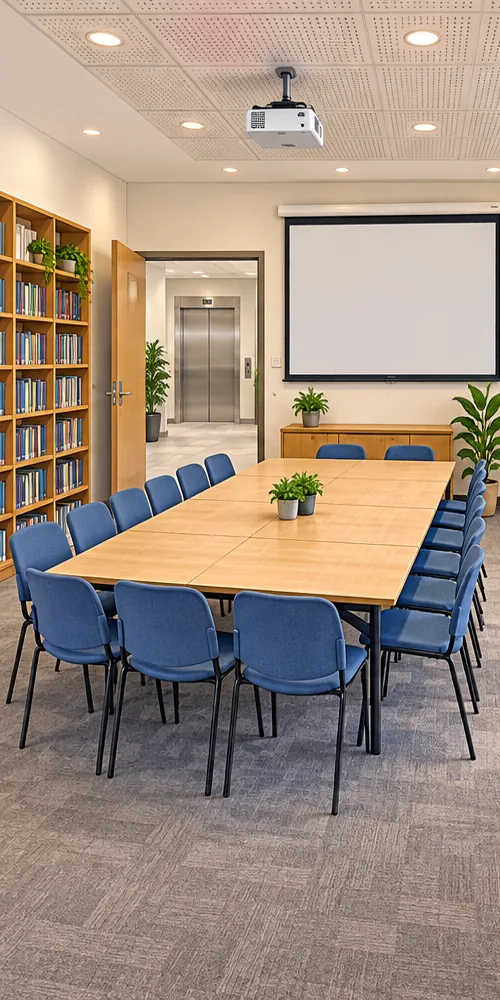
- $45 for two hours
- Capacity: 12 people
- Projector
- Accessible lift
- No sink
B · Garden pavilion
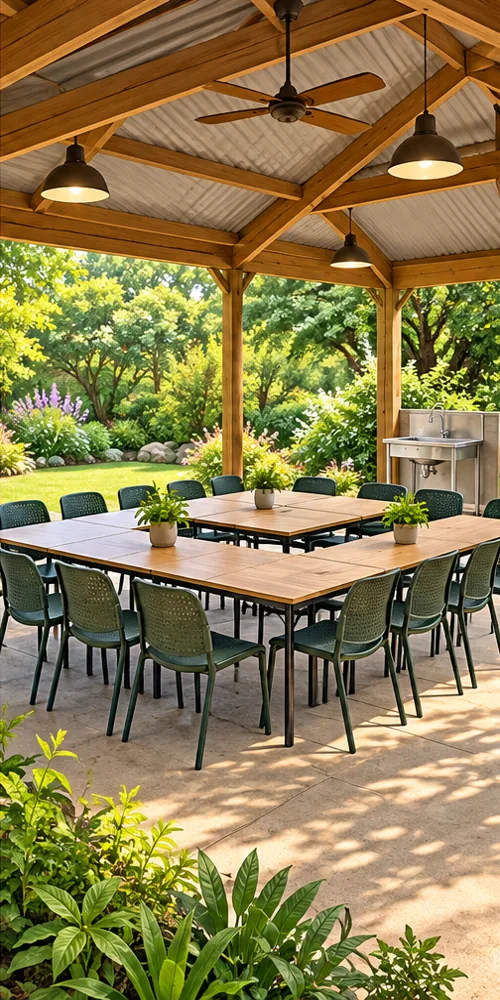
- $30 for two hours
- Capacity: 18 people
- Sink
- Covered outdoor tables
- No projector
If the choosing timer expires without a selection, A is chosen. No speaking is needed in this stage.
The organizer prefers venue C, the sports club classroom. Compare your selected venue with C and persuade the organizer to accept your recommendation. You have 60 seconds to prepare and 60 seconds to respond.
A · Library studio room
- $45 for two hours
- Capacity: 12 people
- Projector
- Accessible lift
- No sink
B · Garden pavilion
- $30 for two hours
- Capacity: 18 people
- Sink
- Covered outdoor tables
- No projector
C · Sports club classroom
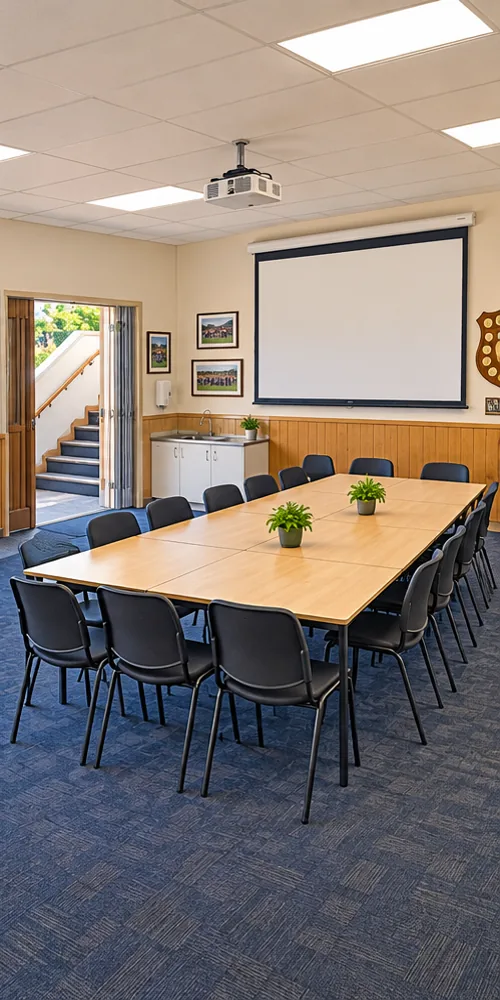
- $60 for two hours
- Capacity: 16 people
- Projector
- Sink
- Stairs only
Optional recording stays in this tab. Timer-only practice is always available.
Show guide and sample responses
Plan your response
- Silently compare A and B and choose.
- Plan a main claim, two comparisons with C and a polite close.
- Address the organizer's preference and connect facts to practical needs.
- Choose A or B based on the workshop's needs.
- Compare accurate price, capacity, facilities and access details with C.
- Explain why the details matter; acknowledge a drawback.
- Timing: 60-second choice, 60-second speaking preparation, 60-second response.
I understand the appeal of C, but … · Our choice costs … less. · We would need to check …
There is no single correct venue. A persuasive response uses the selected option's true features, compares them accurately with C, and explains their relevance.
Choose A: library studio
I understand why you like the sports club classroom: having both a projector and a sink would be useful. However, I would choose the library studio for a small workshop. It costs forty-five dollars for two hours, which saves fifteen dollars compared with the sports club. More importantly, it has an accessible lift, whereas the sports club has stairs only. That could make a real difference to who can attend. The library also has a projector for showing repair instructions. Its disadvantages are the smaller capacity and the lack of a sink. We should confirm that twelve places are enough and choose activities that do not need washing facilities. If those conditions work, could we book the library?
Why it works: There is no single correct venue. A persuasive response uses the selected option's true features, compares them accurately with C, and explains their relevance.
Illustrative 118-word response. Adapt the ideas to your own speaking speed within 60 seconds.
Choose B: garden pavilion
The sports club has useful facilities, but I think the garden pavilion offers better value for our practical workshop. Its thirty-dollar fee is half the sports club price for the same two hours. It also holds eighteen people rather than sixteen, and it has a sink for cleaning up afterward. The covered tables would give us places to spread out tools. We would lose the projector, so I suggest using printed diagrams and small demonstrations. I would also check the weather arrangements and access before booking, because those details are not fully explained. If they are suitable, we could welcome a slightly larger group and spend the money saved on repair supplies. Would you consider that option?
Why it works: There is no single correct venue. A persuasive response uses the selected option's true features, compares them accurately with C, and explains their relevance.
Illustrative 117-word response. Adapt the ideas to your own speaking speed within 60 seconds.
Check your response
- Did I answer every part of this task and keep the intended listener in mind?
- Did I support my main point with specific, relevant details?
- Did I organize my response and finish within the response time?
- Did I compare my actual selection with C using the printed facts, without assuming unlisted features?
Task 6: Dealing with a Difficult Situation
You volunteer at a food pantry hosted by the library. You promised Sam that you would help set up donation tables at 4:00 p.m. The library coordinator now asks you to attend an urgent safety briefing at the same time. Choose one person to address, explain the conflict and propose a practical solution.
Optional recording stays in this tab. Timer-only practice is always available.
Show guide and sample responses
Plan your response
- Choose Sam or the coordinator.
- Explain the conflict respectfully.
- Offer a realistic alternative and follow-up.
- Stay with your selected audience.
- Acknowledge the effect on that person.
I'm sorry for the short notice. · Would it be possible to …? · If that is not possible, …
Each branch addresses its intended listener, explains the real conflict and proposes a specific solution. Neither choice is uniquely correct.
Address Sam
Hi Sam, I'm sorry for the late change, but I need to discuss our four o'clock setup. The library coordinator has just asked me to attend an urgent safety briefing at exactly the same time. I know you are counting on me, and I do not want to leave you arranging all the tables alone. Could I come at three-thirty and get the tables ready before the briefing starts? If there is still work left, I can ask another volunteer whether they can cover it. I will confirm the arrangement with you before leaving. I still intend to help with the pantry; I just need to make sure I attend the required briefing as well.
Why it works: Each branch addresses its intended listener, explains the real conflict and proposes a specific solution. Neither choice is uniquely correct.
Illustrative 115-word response. Adapt the ideas to your own speaking speed within 60 seconds.
Address the coordinator
Hello, could I check the arrangements for the safety briefing? I understand that it is urgent and want to attend. I also promised Sam that I would help prepare the pantry tables at four, so the two commitments now overlap. Is there another approved briefing session, or is this the only one? If I must attend at four, I will contact Sam straight away and try to arrange cover or complete the setup earlier. I do not want to miss essential safety information or leave my teammate without help. Please let me know what is acceptable, and I will confirm the plan with Sam. Thank you for helping me work out the schedule.
Why it works: Each branch addresses its intended listener, explains the real conflict and proposes a specific solution. Neither choice is uniquely correct.
Illustrative 113-word response. Adapt the ideas to your own speaking speed within 60 seconds.
Check your response
- Did I answer every part of this task and keep the intended listener in mind?
- Did I support my main point with specific, relevant details?
- Did I organize my response and finish within the response time?
Task 7: Expressing Opinions
Do you think neighbourhoods should offer more free spaces where residents can meet, study or work on small projects? State your view, develop your reasons and address a possible difficulty.
Optional recording stays in this tab. Timer-only practice is always available.
Show guide and sample responses
Plan your response
- State your view.
- Develop two reasons with examples.
- Address a challenge and possible safeguard.
- Conclude clearly.
- Use concrete examples and consider cost, noise or upkeep fairly.
I support this because … · A practical example would be … · A concern we should address is …
Look for a stated position, developed reasons, examples, and a fair response to a drawback.
Illustrative response
I support providing more free shared spaces, as long as there is a realistic plan to manage them. First, people do not all have the same facilities at home. Someone sharing a crowded apartment may need a quiet table for studying or completing a job application. A room with dependable opening hours could be very useful without requiring that person to buy anything. Second, shared rooms can bring neighbours together. For example, a repair group or a book exchange needs somewhere to meet, but may not have enough money to rent a commercial venue. Of course, free access does not mean the room costs nothing to run. Heating, cleaning and staff time still have to be funded. I would begin by opening an existing community room for limited hours, with clear booking and tidying rules. The neighbourhood could then review demand before expanding it. That approach would make the space useful while keeping its costs and responsibilities visible to everyone.
Why it works: Look for a stated position, developed reasons, examples, and a fair response to a drawback.
Illustrative 160-word response. Adapt the ideas to your own speaking speed within 90 seconds.
Check your response
- Did I answer every part of this task and keep the intended listener in mind?
- Did I support my main point with specific, relevant details?
- Did I organize my response and finish within the response time?
Task 8: Describing an Unusual Situation
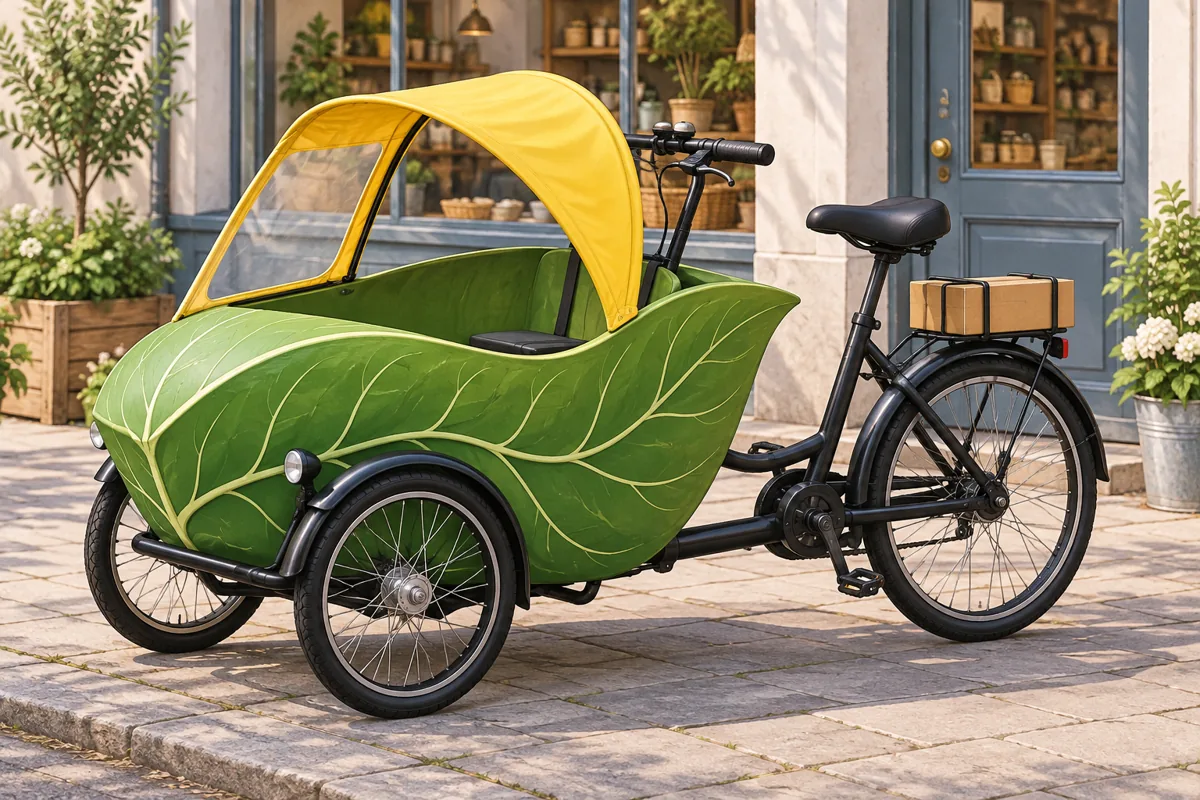
You are outside a shop and see the unusual cargo cycle in the picture. Telephone the community transport office. Describe the object clearly, then ask whether they know who operates it or where you could get more information.
Optional recording stays in this tab. Timer-only practice is always available.
Show guide and sample responses
Plan your response
- Greet the office and state your location.
- Describe the visible object from general to specific.
- Ask a clear question.
- Do not invent a brand or owner. Mark guesses as guesses.
I'm calling about an unusual … · The front section looks like … · Do you know whether …?
The model's visual claims match the artwork: leaf-shaped green frame, yellow canopy, parcel box outside a shop. It marks purpose as a guess.
Illustrative response
Hello, I'm outside a neighbourhood shop and have noticed a very unusual cargo cycle. I wondered whether your office could tell me anything about it. The front compartment looks like a giant green leaf, with pale veins across its sides. A yellow canopy covers that front section. Behind it, there is a black saddle and a small parcel box above the rear wheel. It has three wheels altogether, so it looks wider than an ordinary bicycle. I cannot see an operator's name. It might be intended for local deliveries, although that is only a guess. Do you know whether it belongs to a community transport project, or who I could contact to find out?
Why it works: The model's visual claims match the artwork: leaf-shaped green frame, yellow canopy, parcel box outside a shop. It marks purpose as a guess.
Illustrative 114-word response. Adapt the ideas to your own speaking speed within 60 seconds.
Check your response
- Did I answer every part of this task and keep the intended listener in mind?
- Did I support my main point with specific, relevant details?
- Did I organize my response and finish within the response time?
- Did I keep visible facts separate from guesses or predictions?
Finish speaking, then review your attempts and self-assessment.